ZJU PhD student XIA Yangxiu wins gold at 2nd National College Student Career Planning Competition


At the grand finals of the 2nd National College Student Career Planning Competition, XIA Yangxiu, a PhD student from Zhejiang University’s Ocean College, stood out with a stellar performance. He won the Gold Award in the postgraduate category and topped his group, thus earning an invitation to appear on CCTV 10, the science and education focused channel of the CCTV network. Under the spotlight, he shared how he and his team practiced “underwater embroidery” as they pursued deep-sea innovation. His confident and composed presence is the outcome of years of steady effort, supported by the strong research environment at Zhejiang University.
XIA grew up in Xiangshan, Ningbo, a small town embraced by the sea on three sides. As a child, the ocean meant the spectacular sight of thousands of fishing boats setting sail each season and the excitement of fresh seafood. “My understanding of the ocean back then was mostly about daily life and marine creatures,” he recalled. That changed after he entered Zhejiang University, where new possibilities quietly opened up.
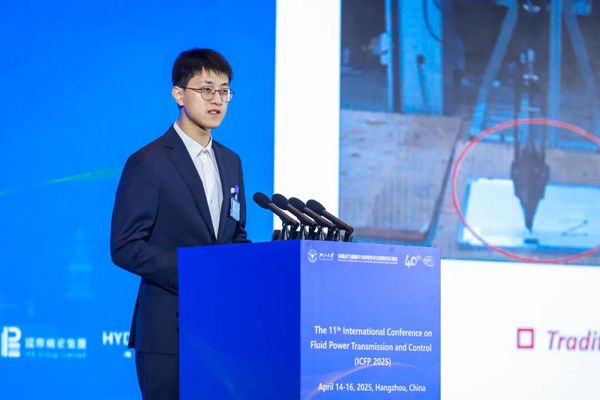
In his sophomore year, XIA joined an undergraduate research training program. Among several topics proposed by his advisor, Professor CHEN Zheng, he chose to explore underwater manipulators, an option that unexpectedly launched him into the world of deep-sea science. “Whether it’s seabed mineral mining, collecting scientific samples, or capturing underwater targets, all of it depends on manipulators—the ‘skillful hands’ of the deep sea,” he explained. “They are essential for completing the ‘last mile’ of deep-sea exploration and supporting China’s goals as a maritime power.” From then on, the ocean became, for him, not just an expanse of water but a frontier full of engineering challenges and scientific promise.
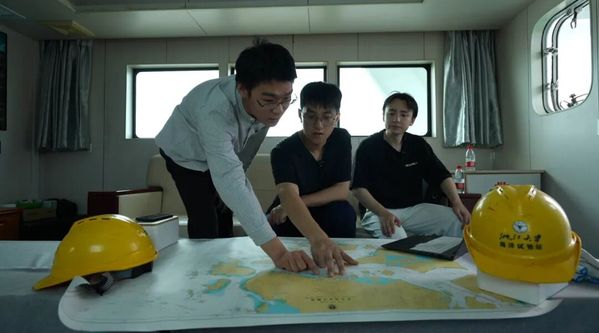
XIA often compares deep-sea manipulator operations to doing embroidery underwater. His team works to enable manipulators to perform delicate tasks, such as threading a needle, despite darkness, crushing pressure, and unpredictable conditions. But three problems exist in deep-sea operations: unstable control, poor visibility, and slow grasping. The team responded by seeking breakthroughs in both vision and control.
To address underwater distortion and blurry images, they developed a dual-stage “visual servo” system that uses coarse and fine positioning to help the manipulator “see” and track targets autonomously. Meanwhile, XIA focused on improving the motion control of hydraulic manipulators. Though extraordinarily powerful and capable of withstanding extreme pressure, hydraulic arms fall behind land-based systems in precision and responsiveness. By designing advanced control algorithms, he essentially gave the manipulator a smarter, more agile “little brain.”
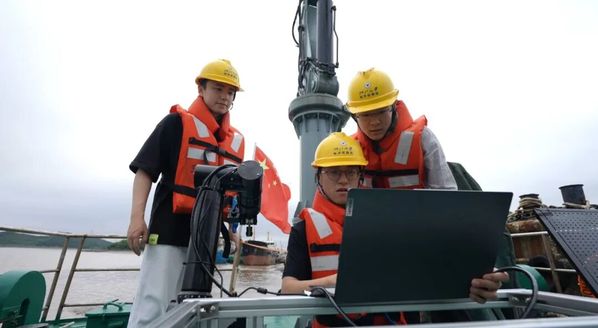
After years of effort, the team improved control accuracy from centimeters to millimeters, a leap that marks a key step forward in China’s intelligent underwater operations, moving from basic reachability to true precision. The team also developed a unique teleoperation system that allows operators to guide underwater manipulators in real time, as well as a virtual reality backup system that provides clear digital scenes when underwater vision fails.
XIA’s journey has never been a solo endeavor. His development is tightly connected to the strong support at Zhejiang University’s Ocean College. Guided by Professor CHEN, he advanced from undergraduate research to doctoral studies along a consistent and deepening academic path. “Professor CHEN encouraged us to attend international conferences and explore boldly,” XIA said. The research group has also created a collaborative mentorship system. Although more than twenty members are spread across Hangzhou, Zhoushan, and Hainan, covering everything from control to vision to planning, regular online seminars keep the team closely connected.
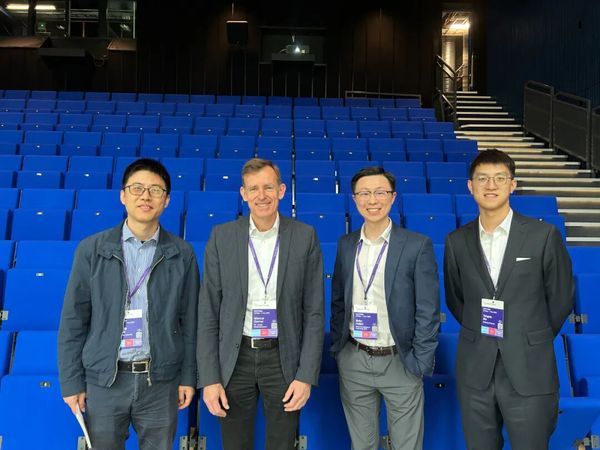
“Our team is like a ‘pi-shaped research community,’” XIA said. Each member contributes a specialized pillar to support the shared goal of developing high-performance underwater robotic operations. “π is infinite and our team continues to grow and thrive just like that.”
Much of this progress is anchored in the resources of the Ocean College. Zijingang research vessel, pressure-testing facilities, wave tanks, and the coastal setting of the Zhoushan campus offer ideal conditions for turning scientific ideas into real engineering solutions. What XIA appreciates just as much is the college’s responsiveness to student needs. “From seed funding for research to simply building covered parking for electric bikes, the college’s support is always quick and practical,” he said. Feeling valued motivates him to keep moving forward.
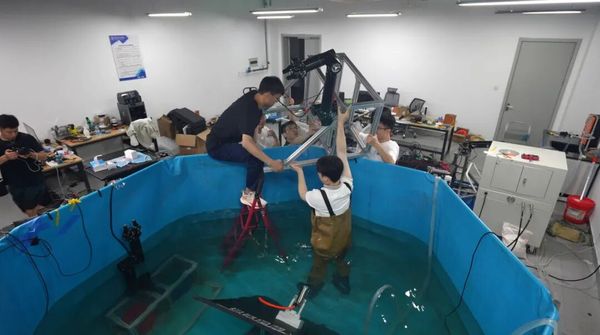
Looking back, XIA is grateful to be working in a field aligned with national priorities. “‘Building a maritime power’ is China’s long-term strategy,” he said. “The underwater robotic-arm technologies we work on may seem small, but they are crucial for seabed network deployment, mineral exploration, archaeological research. These major projects matter a lot to the country. They are one of the keys to opening the ‘gateway beneath the waves.’”
Translator: FANG Fumin
Editor: HAN Xiao