A night in the Guantong Hall: a dialogue between east and west


At 10:30 p.m., just as the main library of ZJU was about to close, a clear chime echoed from deep within the sixth-floor stacks. Leaning against the railing stood DU Liniang with her flowing sleeves, while Romeo’s whispers intertwined with Juliet’s soft replies. This was not a dream, but an immersive performance of A Night in the Guantong Hall unfolding inside the library.
As part of Zhejiang University’s “Symphony of Time and Space: Cross-Era Dialogues Between Chinese and Western Civilizations” series, the play was creatively planned by the library and performed by students and faculty of ZJU.
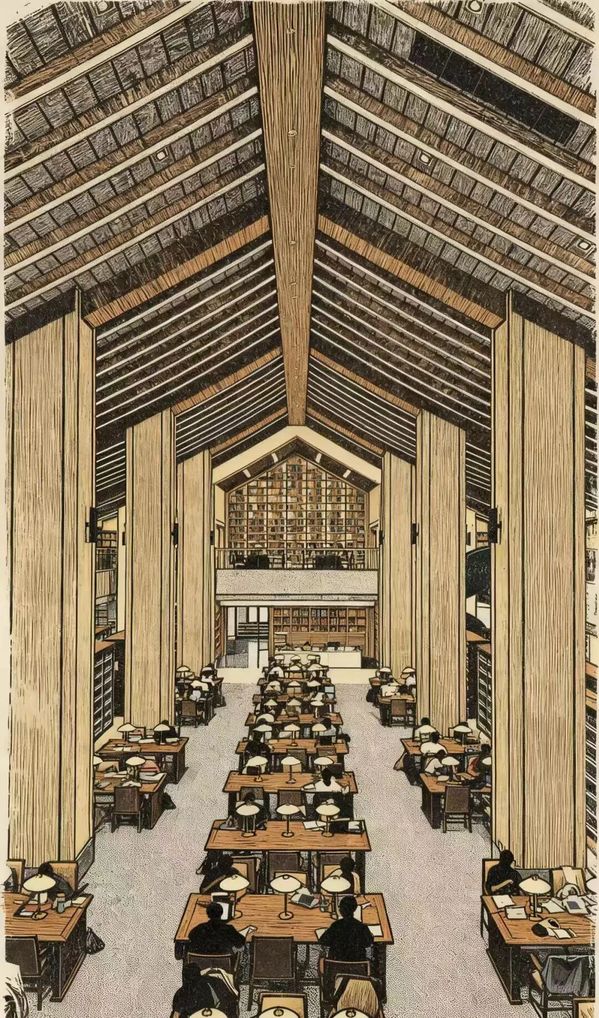
Immersive experience, revitalizing the classics
When online ticket sales opened, all 100 tickets were snapped up in just 16 seconds. On the night of the performance, audience members entered holding star-shaped lights. The shadows cast on the bookshelves, combined with carefully designed lighting, made it feel as if everyone had become part of the play.
Rather than sitting formally, the audience freely moved through the space, brushing past DU Liniang and listening to Romeo’s whispers. The actors skillfully blended the gentle elegance of The Peony Pavilion with the passionate intensity of Romeo and Juliet. Lighting and sound effects complemented the library’s natural book-scented atmosphere, creating a literary dreamscape that seemed to transcend time and space.
After the performance, the audience left numerous messages. Some students who had never been interested in classical drama were inspired to read The Peony Pavilion, commenting, “I never realized classics could feel so close.” Reflecting on the response, producer and librarian HE Dongyang said, “The biggest takeaway from this special production is to ‘believe in possibilities’—to believe classics can be presented in a youthful way, that a non-professional team can still create surprises, and that many people on campus cherish quality cultural experiences.”
Crafted with care, full of detail
The stage spectacle was the result of efforts from many contributors. From undergraduates to graduate students, and across disciplines ranging from philology to dentistry, the diverse cast and crew brought multiple perspectives to A Night in the Guantong Hall. Lead performers said that playing their roles not only deepened their understanding of classic literature but also strengthened their interdisciplinary communication and artistic expression skills.
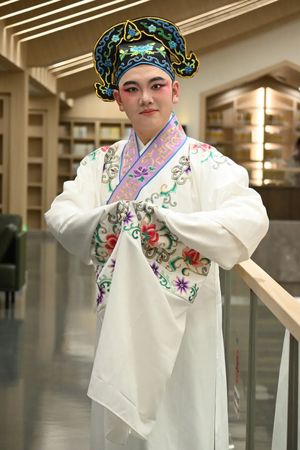
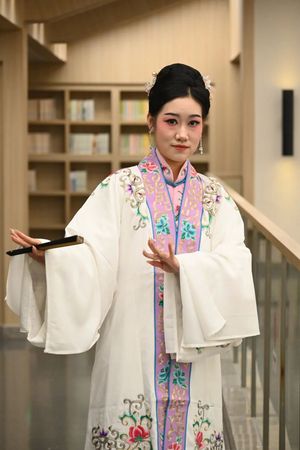
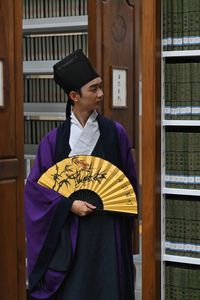
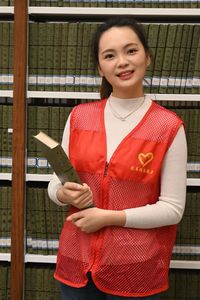
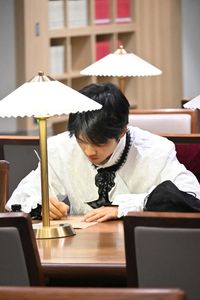
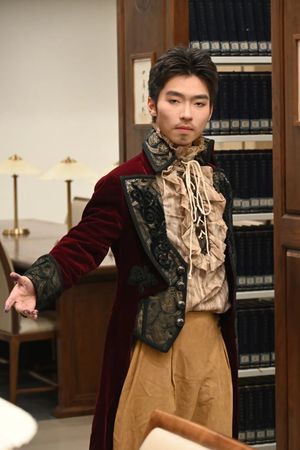
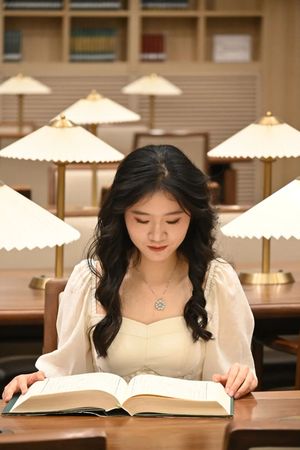
To balance scholarship with entertainment, the team invited Professor HU Zhiyi from the College of Media and International Culture and Professor LOU Hansong from the School of Literarure as academic advisors, ensuring the adaptation respected the originals. Instructors and directors from the Department of Public Physical and Art Education handled the “youthful approach,” designing a narrative where a library student assistant accidentally triggers a dialogue, naturally connecting the stories of the two literary masters from a ZJU student’s perspective.
Preparation was challenging: coordinating across campuses and managing fragmented schedules. Rehearsals were concentrated on weekends and after library hours. In the quiet of the Guantong Hall after the crowds had left, faculty and students repeatedly polished lines and adjusted lighting and sound.
Director JIA Yaopeng reflected, “This project, centered on ‘resonance across time and space,’ broke the boundaries of traditional theatre and gave the library a new theatrical life late at night. Every step, from conception to performance, was shaped by the team’s thought and effort. This late-night theatrical journey will remain one of our most treasured creative memories.”
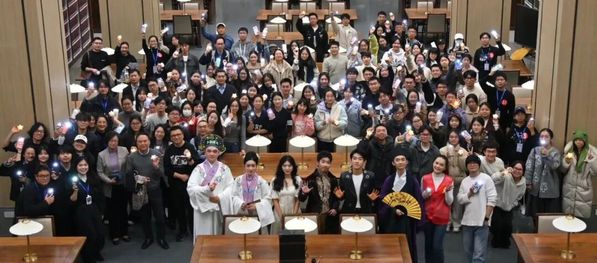
The show came to an end, but its cross-era performance left a lasting impression on the audience, reigniting the vitality of literary classics. Perhaps when the library bells ring again, what opens will not only be the curtain of a play, but also a gateway to a dialogue between past and present, East and West.
Adapted and translated from the article written by YU Jiaxin, HE Dongyang
Translator: LIU Zhenghao (’2026, Law)
Photo: the interviewees
Editor: HAN Xiao