UNESCO and ZJU join hands to chart a shared future for civilization


A road connects the East and the West and links the past and the present. More than a route traced on the map, the Silk Roads have long been an epic road of mutual learning among civilizations. Today, that ancient corridor has gained a new landmark.
On the afternoon of February 1, the UNESCO Chair on Silk Roads Heritage was officially unveiled at the Zhejiang University Museum of Art and Archaeology. Scholars and guests from China and abroad gathered to witness this milestone moment — one that bridges history and the future, and integrates scholarship with civilization.
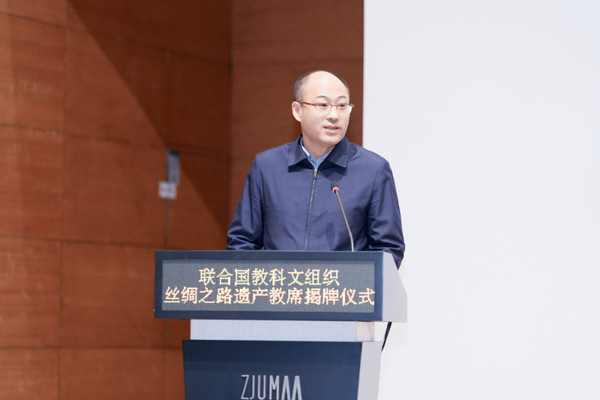
In his remarks, MA Yanming, President of Zhejiang University, described the Chair as recognition of the University’s growing influence in Silk Roads studies and a strategic platform for deeper international collaboration and participation in global governance. He expressed hope that, with support from all partners, the Chair will become “a cultural bond linking the past and the present and fostering dialogue between China and the world,” contributing to cultural exchange and mutual learning among civilizations.
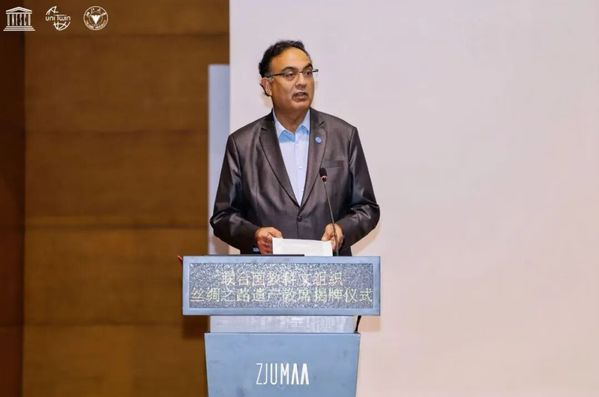
Shahbaz Khan, Director and Representative of the UNESCO Regional Office for East Asia, spoke highly of the achievements made by Zhejiang University and other institutions, noting that the scholars present are “safeguarding the cultural heritage of the Silk Roads through intercultural dialogue and digital innovation.” He called for sustained cooperation to jointly advance the United Nations Sustainable Development Goals.
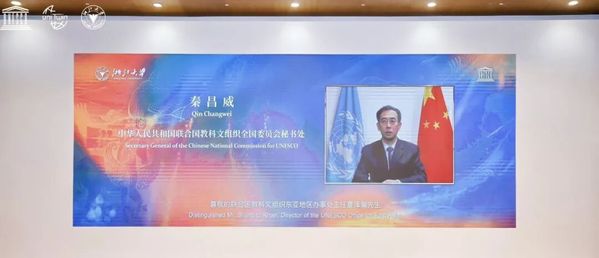
QIN Changwei, Secretary-General of the Chinese National Commission for UNESCO, hoped that the Chair would build on Zhejiang University’s academic strengths to produce research with international impact and to cultivate a new generation of professionals and leading experts fluent in international rules and proactive in cross-border heritage exchange and cooperation.
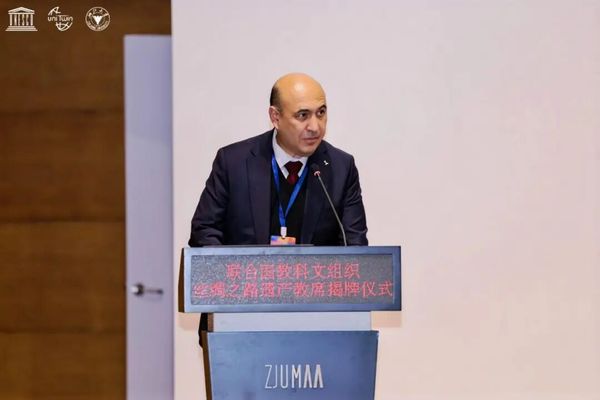
Speaking from the perspective of heritage and tourism, Bahodirhon Safarov, Chairholder of the UNESCO Chair on Sustainable Heritage Tourism along the Silk Roads, emphasized the need for partnerships that unite long-term academic collaboration with concrete outcomes, pooling expertise and regional experience to support sustainable global cooperation in tourism development.
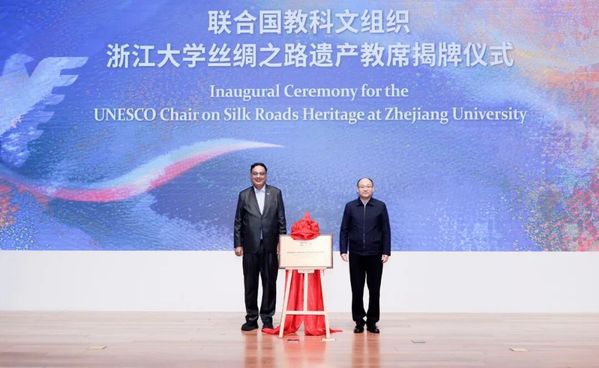
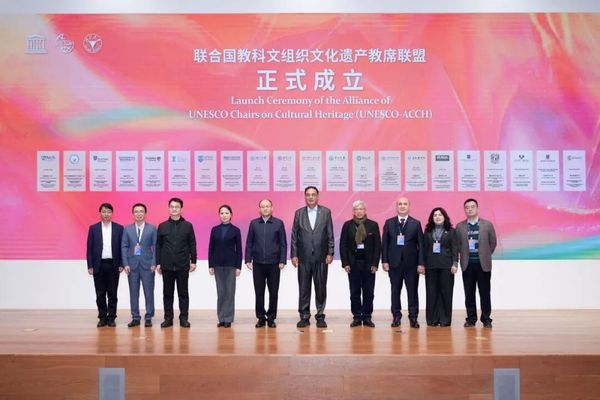
Launched in 1992, the UNITWIN / UNESCO Chairs Programme, which involves about 900 institutions in over 120 countries, aims to promote international inter-university cooperation.
For Zhejiang University, the new Chair is its second UNESCO Chair, following the UNESCO Chair in Entrepreneurship Education approved in 2010. The achievement is rooted in years of sustained work in the humanities and social sciences. In June 2025, the Silk Art and Silk Road Culture Research Center at Zhejiang University was approved as a Key Research Base for Philosophy and Social Sciences in Zhejiang Province, marking the formation of a synergistic “Chair-Base-Team” development model.
This momentum is also powered by interdisciplinary innovation where silk art meets archaeology, and where digital humanities open new frontiers for heritage research. In the same month in 2025, the first specialized research facility under the Chair system — the Textile Archaeology Laboratory — was officially inaugurated on Xixi Campus, providing key support for interdisciplinary, evidence-based research on the tangible civilization of the Silk Roads.
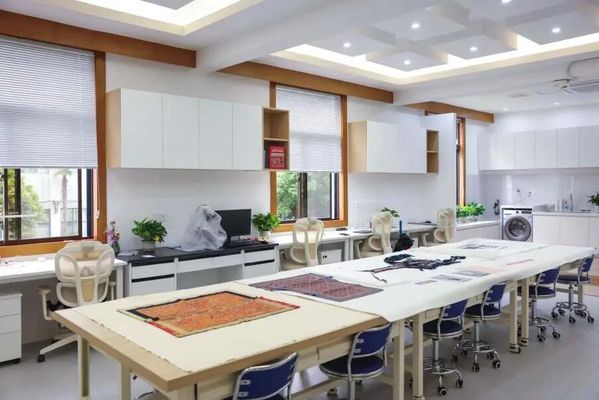
From long-term disciplinary cultivation to the building of global platforms, Zhejiang University is drawing on deep academic reserves to help construct a bridge toward the future, one that strengthens research, conservation, and public understanding of Silk Roads heritage.
Since its establishment, the Chair, supported by Zhejiang University’s academic platforms, has made a series of substantial advances in promoting diverse international exchanges and cooperation.
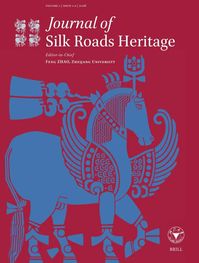
At the unveiling ceremony, the Chair announced the launch of its English-language journal, Journal of Silk Roads Heritage (JSRH), which seeks to fill a long-standing gap in both international and domestic publishing: a dedicated platform focused on Silk Roads artifacts and craftsmanship. The journal aims to integrate Zhejiang University’s research strengths and serve as a humanities forum through which China’s independent knowledge system can be presented on the world stage.
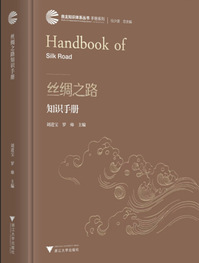
Supporting that same goal is the newly released Handbook of the Silk Roads, which introduces core concepts and disciplinary characteristics of Silk Roads studies, and offers a multi-perspective view of material circulation and cultural exchange over the course of the Silk Roads.
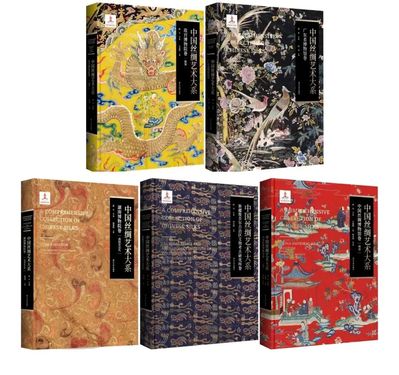
Building on its previous contributions to A Comprehensive Collection of Ancient Chinese Paintings, the Zhejiang University team from the School of Art and Archaeology has also joined the creation of A Comprehensive Collection of Chinese Silk Art. In collaboration with more than 80 institutions worldwide, the project plans to publish 100 volumes of curated image catalogues — an ambitious academic undertaking that blends an international vision, a national perspective, and a distinctive Zhejiang strength.
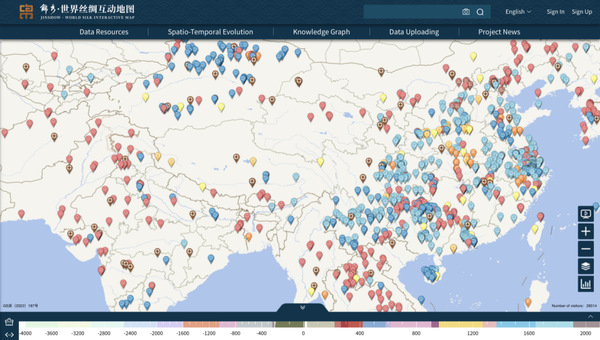
Meanwhile, the School of Art and Archaeology continues to expand its digital humanities work through the open platform World Silk Interactive Map. The platform has integrated seven categories of resources, including cultural relics and images, and has collected 13,143 data entries, becoming a significant piece of digital infrastructure for global research on silk cultural heritage.
“We hope to see more participants worldwide, forming a larger network of cooperation and jointly creating a brighter future for Silk Roads cultural heritage,” said ZHAO Feng, Chairholder and professor at the School of Art and Archaeology. Zhejiang University is also organizing the “Silk Roads Intercultural” lecture series, offering related general-education courses for undergraduates, and advancing public education initiatives such as the “Intangible Cultural Heritage Projects on the Silk Roads,” bringing Silk Roads knowledge beyond academia and into society.
Through rigorous research, open international cooperation, and deep public engagement, Zhejiang University’s UNESCO Chair on Silk Roads Heritage is working to inject fresh vitality into ancient heritage, interpret the contemporary value of the Silk Roads through the global lens, and contribute to the building of a community with a shared future for mankind.
Along this road are not only silk, the fragrance of tea, and the distant echo of camel bells, but also the wisdom of dialogue, the warmth of sharing, and the light that illuminates future civilization.
Translator: FANG Fumin
Editor: HAN Xiao