Annual Top 10: They stand out


At the frontiers of discovery, collaboration defines progress.
On the evening of December 24, 2025, Zhejiang University held the Awards Ceremony for the 2024 Top 10 Academic Advances and the Top 10 Academic Advances by Young Scholars. The grand finale opened with the screening of the short documentary I’ll Be There for You, setting a warm and reflective tone for the evening.
Spanning the humanities and sciences, theory and engineering, and basic and applied research, this year’s awards highlight the breadth and vitality of academic innovation at Zhejiang University. Together, they reflect how interdisciplinary collaboration continues to drive meaningful scientific and scholarly progress.
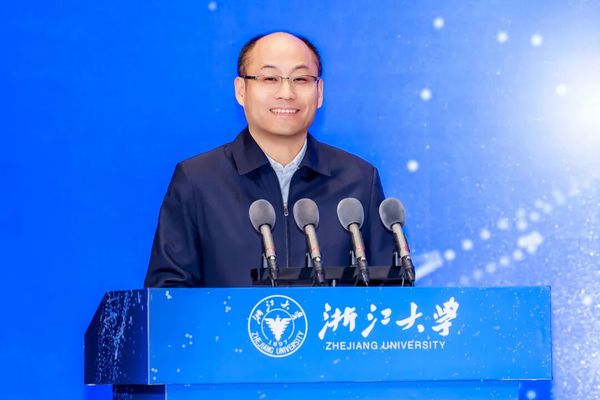
MA Yanming, President of Zhejiang University, encouraged faculty and students to “bravely scale academic heights, continuously enhance original innovation in basic research; serve national strategies and strengthen the capacity to generate major breakthroughs; and uphold the spirit of ‘Seeking Truth,’ striving to build a world-class academic innovation ecosystem.” He called on the community to pursue truth and lead development with steadfast determination, contributing to high-level scientific and technological self-reliance and the construction of China’s independent knowledge system.
CHEN Yunmin, Chair of the Zhejiang University Academic Committee, shared his expectations for the academic community: “Stay curious and bold in crossing disciplinary boundaries; appreciate one another’s work and advance together; keep a global perspective and strive for the highest academic standards.”
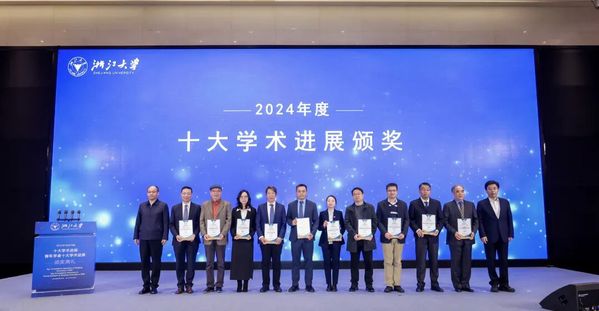
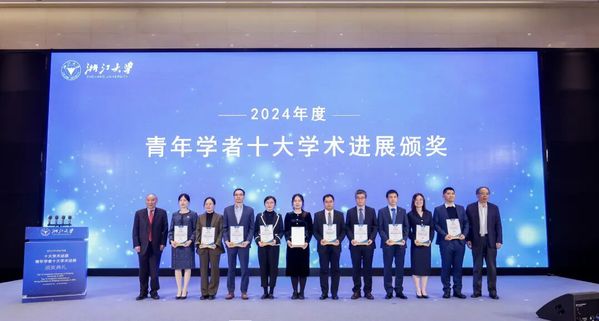
At the ceremony, the 2024 Top 10 Academic Advances and Nomination Awards, the 2024 Top 10 Academic Advances by Young Scholars and Nomination Awards, and the Best Appreciation Award were officially announced.
Below is an overview of the 2024 Top 10 Academic Advances.
Rewriting the rules of disease treatment
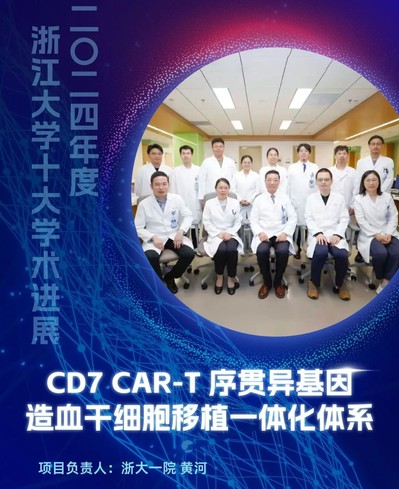
Relapsed and refractory blood cancers remain among the most intractable problems in hematology. A research team led by HUANG He, HU Yongxian, and WANG Dongrui developed an innovative therapeutic framework that departs from conventional treatment strategies. By uncovering new biological mechanisms and translating them into clinical approaches, their work opens the door to effective treatment.
Untangling oil and water
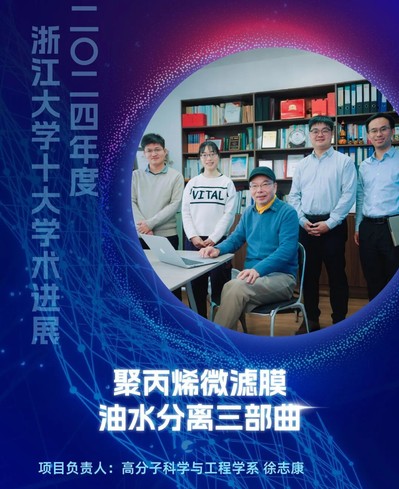
Efficient separation of oil–water emulsions is critical for environmental protection and resource recovery. XU Zhikang’s group proposed a three-step separation strategy using polypropylene microfiltration membranes, offering a scalable and conceptually new solution to a long-standing industrial challenge.
Making solar power last
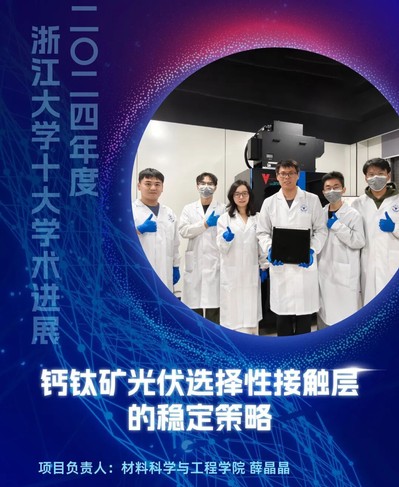
Solar photovoltaics play a vital role in achieving China’s carbon peaking and carbon neutrality, yet long-term device stability remains a major barrier to industrialization. XUE Jingjing’s team challenged prevailing assumptions in photoelectric materials and developed a new materials system that redefines how stability can be engineered into next-generation photovoltaic devices.
Reading the history written in sand
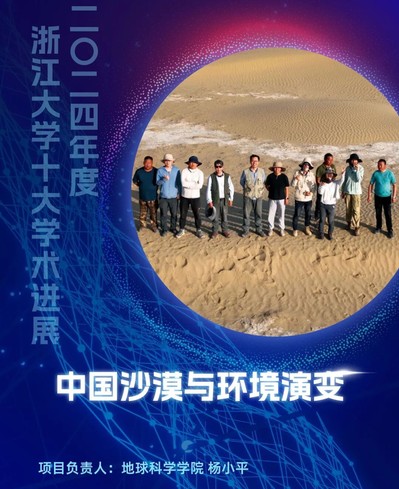
Deserts cover a vast fraction of Earth’s surface, yet their formation and evolution are still not fully understood. YANG Xiaoping’s team traversed vast terrains to systematically synthesize new findings on desert environmental evolution in China, presenting a multidimensional picture of dramatic environmental changes in desert regions.
Robots beneath the waves
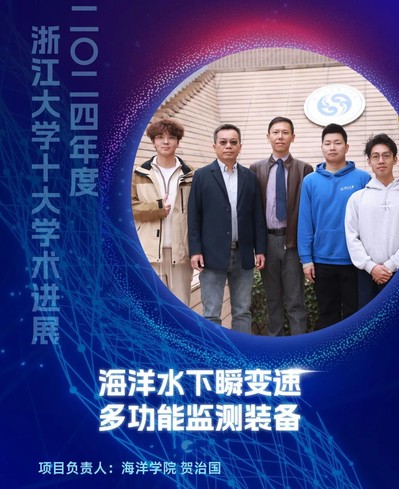
As offshore infrastructure expands, so does the need for precise underwater inspection. HE Zhiguo’s team introduced a new paradigm for high-performance biomimetic robots, integrating multiple sensing and operational functions into a single platform and significantly advancing marine structural health monitoring.
Expanding the language of protein modification
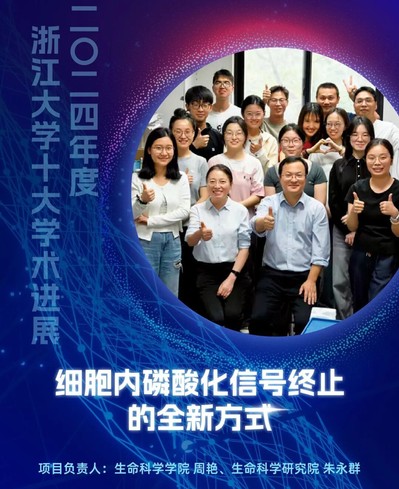
Protein phosphorylation is one of the most widespread post-translational modifications and plays a central role in cellular signal transduction. The team led by ZHOU Yan and ZHU Yongqun identified a novel post-translational modification—ADPylation, challenging canonical models of cellular regulation. Their findings open new avenues for studying signaling pathways and developing therapeutic strategies.
Where metabolism meets immunity
Lactate, once viewed as a metabolic byproduct, is now recognized as a signaling molecule. The research by ZHANG Long’s team overturns the conventional views of auto-acylation reactions, revealing how lactate sensing shapes immune evasion and disease progression through a newly defined metabolic-immune regulatory network.

Teaching chips to think
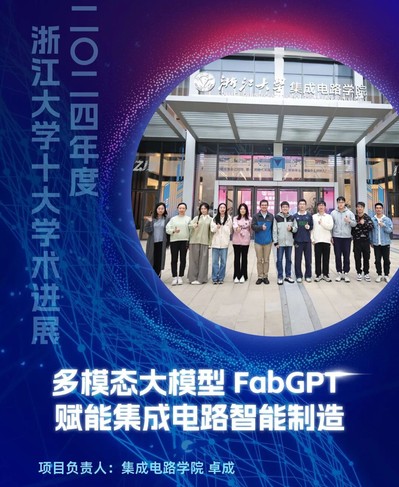
Chip manufacturing has long relied heavily on expert experience and trial-and-error. ZHUO Cheng’s team developed FabGPT, the world’s first multimodal large model for chip manufacturing. By addressing challenges in high-dimensional optimization, the model marks a step toward more intelligent, data-driven chip production.
Where quantum meets the macroscopic
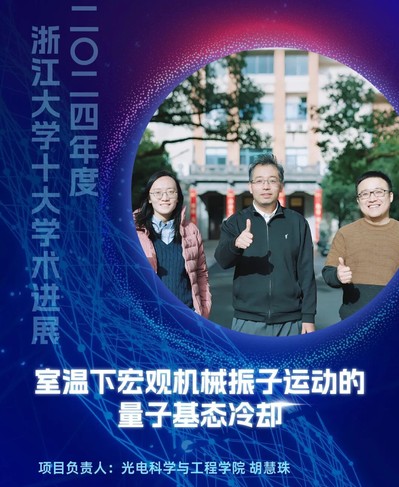
Is there a boundary between quantum and classical physics? This question lies at the heart of humanity’s century-long quest to understand nature’s deepest laws. HU Huizhu’s team achieved quantum ground-state cooling of macroscopic mechanical oscillators at room temperature—an experimental milestone that creates a new platform for exploring macroscopic quantum phenomena.
Rethinking how government works
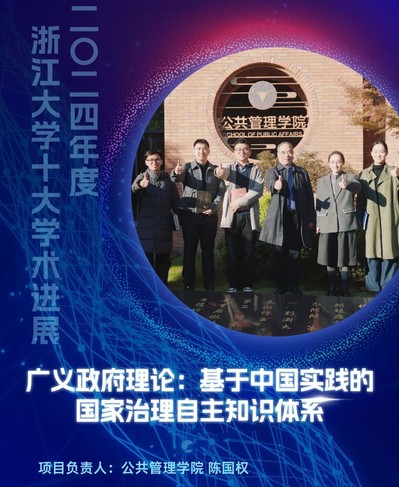
Drawing on China’s governance practices, CHEN Guoquan’s team proposed the theory of general government that offers a systematic explanation of the structure and operation of public power. The work moves governance studies from descriptive narratives toward a more coherent theoretical paradigm.
True innovation often emerges at the boundaries between disciplines, and major breakthroughs are frequently sparked by the convergence of different ways of thinking. The 2024 academic advances at Zhejiang University stand as a fitting testament to this principle: progress is driven not by isolated efforts, but by collaboration, among people, ideas, methods, and fields.
In science, as in discovery itself, partners matter.
Translator: FANG Fumin
Editor: HAN Xiao