XUE Ziwei: from curiosity to the microscopic battlefield of life


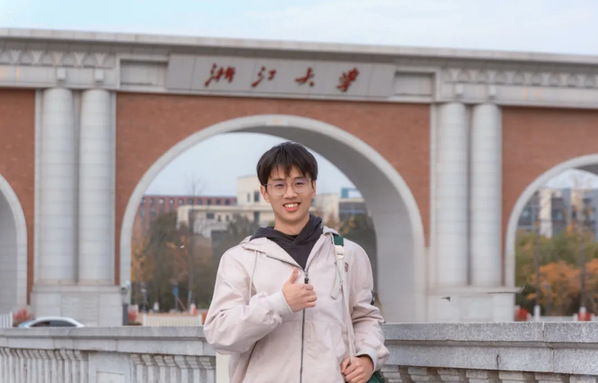
A 2021 PhD student in Bioinformatics, XUE Ziwei still remembers the question that first drew him to biomedical science: “Why does life work this way?” As a teenager, he watched relatives suffer from hereditary diseases and developed a strong desire to understand the mechanisms underlying human health. This curiosity eventually led him to the Zhejiang University–University of Edinburgh Institute (ZJE), an international dual-degree program that has provided fertile soil for his intellectual growth.
A “military parade” of cells
At ZJE, XUE became increasingly focused on shared challenges to human health, particularly autoimmune diseases such as rheumatoid arthritis and ankylosing spondylitis, which affect more than 80 million people in China. One question has long preoccupied him: T cells are supposed to be the body’s most elite “soldiers,” so why do they sometimes turn their weapons on the body itself? To explore this paradox, he chose to work at the intersection of immunology, T cells, and large-scale AI-driven data analysis.
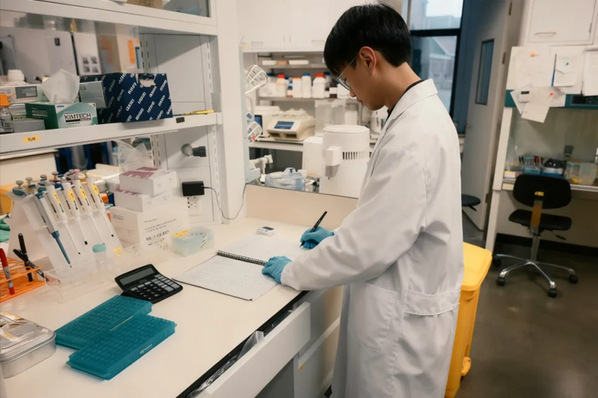
The lights in the lab often burn late into the night, like a lighthouse in the fog guiding his search for answers. One evening, as he stared at rows of data on his screen, a battle scene appeared vividly in his mind: T cell soldiers, each carrying a weapon—the T cell receptor on their surface—marching forward to recognize and attack diseased cells. Another question soon followed: across different individuals and different diseases, do these T cell soldiers share common “antigen recognition” patterns, something like a universal “friend-or-foe identification system” for defensive battle? To address this, he launched a cross-disease “grand review of T cells,” systematically characterizing the multidimensional features of T cells across a range of diseased tissues.
Teamwork as the real “secret weapon”
Under the joint supervision of Associate Professor LIU Wanlu and Professor LU Linrong at ZJE, XUE began to approach this question by combining biomedicine with artificial intelligence. “Professor LIU gave me systematic guidance in bioinformatics, while Professor LU provided deep insights into immunological mechanisms,” XUE says. “Their complementary support has helped me tackle countless challenges in my research.”
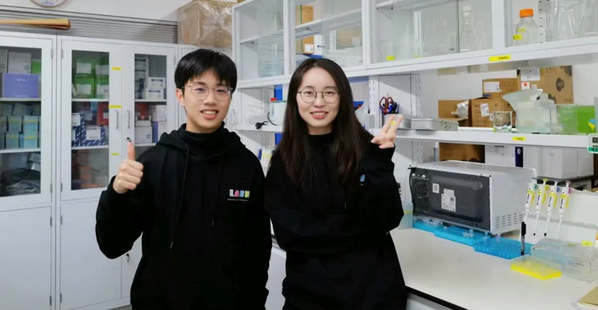
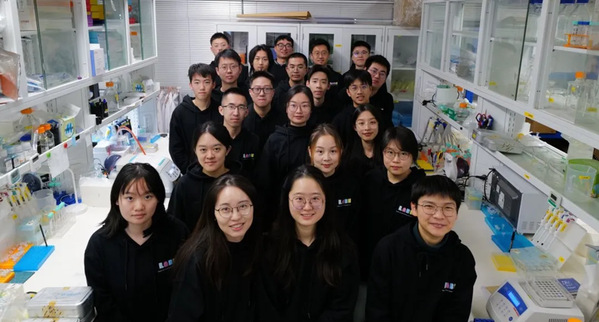
Learning how to “fight as a team” has become one of his key research principles. Whenever a project hits a bottleneck, his team gathers for intensive brainstorming: they analyze problems together, broaden perspectives, and pool ideas. The whiteboard is filled, erased, and filled again until the path forward becomes clear. Regular cross-group discussions, team-building activities, and periodic retreats blend research with relaxation, helping team members better understand each other’s work while also strengthening personal connections.
Empowered by ZJE’s interdisciplinary platform and this collaborative spirit, the team developed a domestically leading large-scale single-cell transcriptomics AI integration algorithm and constructed the world’s first million-level single-cell human CD8+ T cell atlas. Building on this, XUE went on to “deeply decode” large-scale immunity data, using AI to identify disease-associated T cell clones and their underlying patterns, with the potential to provide new targets for precision diagnosis and treatment of immune-related diseases.
From ZJU campus to the Oxford stage
Zhejiang University’s spirit of “Seeking Truth and Pursuing Innovation” has fueled XUE’s scientific exploration, while ZJE’s English-medium curriculum has created a language environment closely aligned with international research. Frequent academic exchange activities on campus have greatly enhanced his confidence and ease when presenting to international audiences.
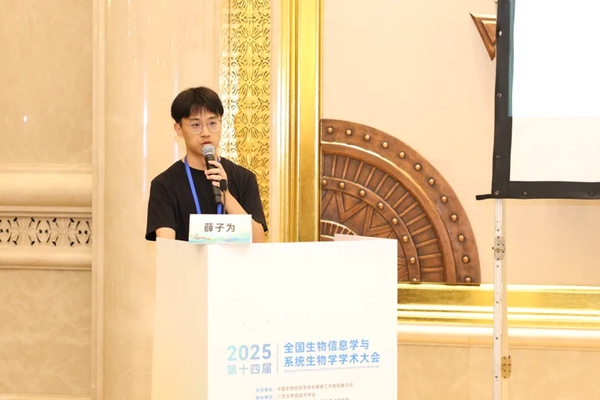
Among the many academic events, the Zijuan Young Scholars Forum and the Biomed-X seminar series left a particularly deep impression on him. Established by ZJE in 2023, the Zijuan Forum aims to promote exchange among young talents in medicine and the life sciences. “I have participated in every edition from the first to the recently concluded fifth forum,” XUE shares. “At Zijuan, students can also stand on stage and present their work to leading researchers in the field. This atmosphere of equal academic exchange has made me more willing to voice my ideas and continually deepen my understanding of my research through dialogue with outstanding scholars.”
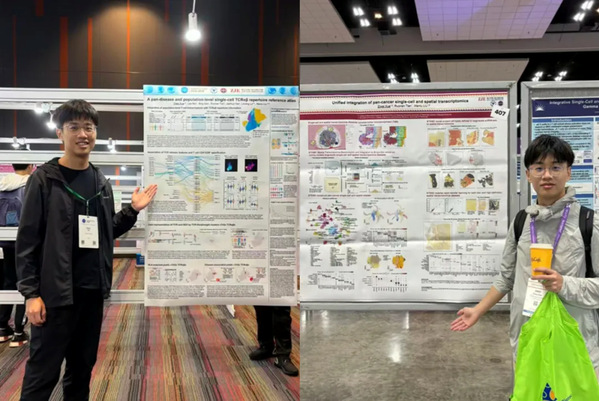
XUE’s stage has gradually expanded—from the lab bench to college lecture halls, then to international conferences in Hong Kong and Honolulu, and eventually to the organizing committee of the ‘T Cell Immunology and AI’ international conference at the University of Oxford, where he served as the only PhD student member. “Seeing an international conference grow from scratch and facilitating cross-border discussions was a completely new experience for a student,” he recalls. At Oxford, he contributed standard datasets derived from his research to the conference hackathon and worked with other committee members to design the competition challenges.
Passing on passion, paying it forward
XUE has never kept his experiences to himself. During his time at ZJU, he has spent three consecutive years serving as a teaching assistant for English-taught undergraduate courses in bioinformatics, helping to supervise multiple students’ graduation projects and research work, and organizing summer training programs for undergraduates. In doing so, he has shared the “world” he has discovered with younger students.
“Try more, explore more. If you don’t know what to do, use trial and error as a process of elimination—it can help you find what you truly love,” he advises. “Don’t be afraid of uncertainty. Once you find your direction, you can embark on an academic journey powered by passion.” Looking ahead, XUE plans to continue with postdoctoral research and remain deeply engaged at the cutting edge of his field.
Adapted and translated from the article written by ZHANG Jiahui, WANG Yuting, LIU Jingchun
Translator: LIU Zhenghao (’2026, Law)
Photo: the interviewees and Internet
Editor: HAN Xiao