World-renowned universities join forces for a greener future


How can we accelerate energy transition while ensuring fairness in technological cooperation, so that global carbon neutrality can be effectively achieved? How can the international community forge shared understanding, shoulder shared responsibilities, and together create a green future for a community with a shared future for mankind?
These questions of our era are calling for the wisdom and action of young people worldwide. In response, the Global Sustainable Challenge was born. Launched jointly by multiple leading universities around the world under the leadership of the Stanford Doerr School of Sustainability, the competition invites youth globally to design, test, and showcase innovative solutions that move sustainable development from vision to reality.
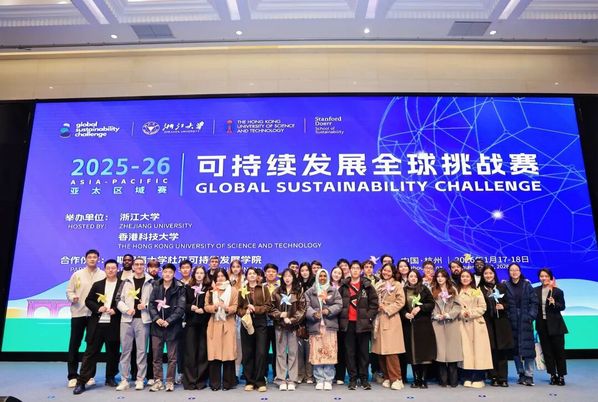
On January 17, the Asia-Pacific Regional Final, co-hosted by Zhejiang University and the Hong Kong University of Science and Technology (HKUST), kicked off on Zijingang Campus, Zhejiang University. A total of 67 finalist teams took the stage for pitches and Q&A sessions on two major themes — “Adaptation & Resilience” and “Sustainable Energy.” With clear analysis and bold imagination, they offered hopeful, practical answers from the new generations to advance the Sustainable Development Goals.
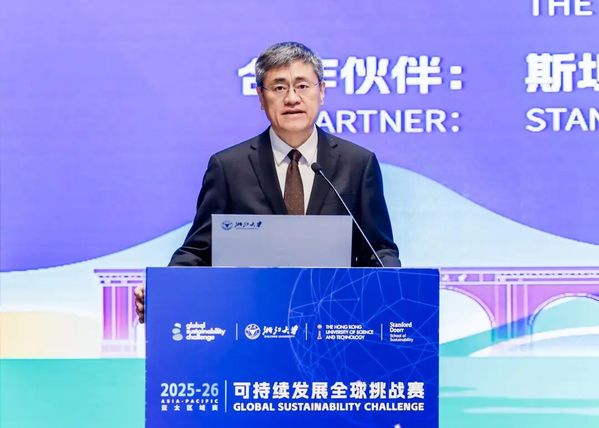
“Zhejiang University regards serving global sustainable development as an important mission,” said REN Shaobo, Chairman of the Zhejiang University Council. He noted that the competition provides a platform for promising Asia-Pacific youth to exchange ideas, learn from one another, and demonstrate their capabilities. He wished all contestants would broaden their horizons through competition, build consensus through collaboration, and gain knowledge, friendship, and growth through dialogue and intellectual exchange.
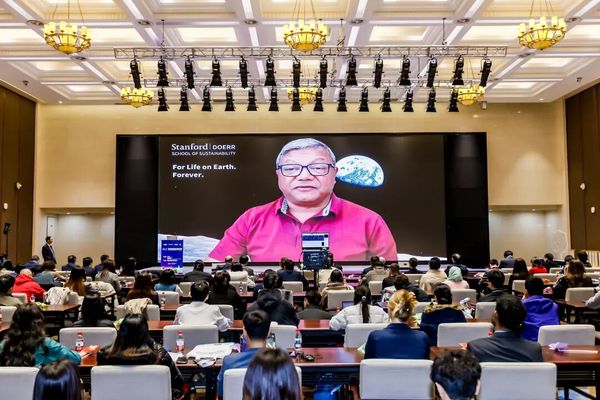
Arun Majumdar, Dean of the Stanford Doerr School of Sustainability, remarked that the young global leaders present are shaping a more sustainable world through their contributions and creativity. He encouraged every participant to "keep listening, stay curious, and act with courage so as to shape a more just, resilient and thriving planet for all."
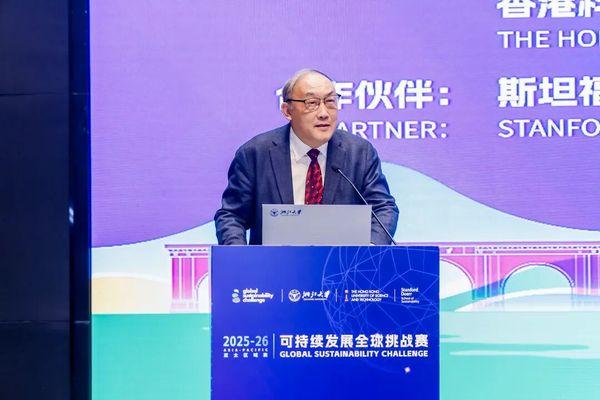
YANG Wei, Fellow of the Chinese Academy of Sciences, told young participants that they should not only deepen their expertise and master the “hard skills” needed to solve concrete problems, but also cultivate a broad outlook and develop “soft power” — the ability to understand diverse cultures and work for the common good. This competition, he said, is like a miniature “world laboratory,” and he hopes today’s students will grow into towering trees that drive the world toward a better future.
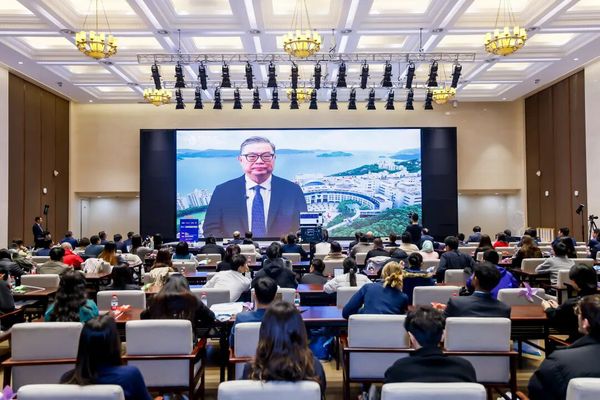
Tam Kar Yan, Vice President of HKUST, expressed gratitude to all partners for co-building the incredible learning-oriented platform together. The challenge, he said, "is not just a competition, but a meaningful learning experience." He encouraged participants to meet future challenges with wisdom and courage and to shape a cleaner, more inclusive, and sustainable world, paying tribute to creativity, collaboration, and an unwavering original aspiration.
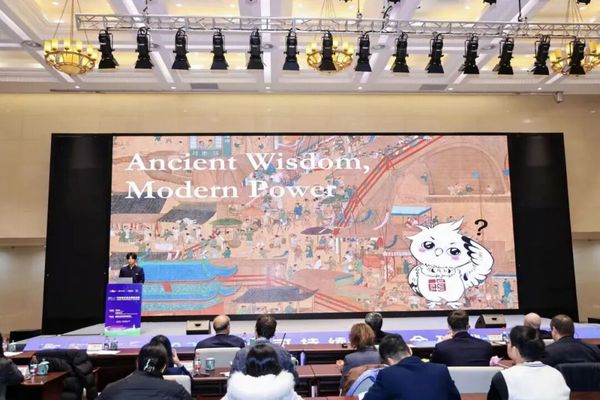
LONG Jinxuan, the student ambassador for this year’s competition, hails from the Mixed Class of Chu Kochen Honors College, Zhejiang University. He reflected on the ecological wisdom embedded in Chinese tradition — “harnessing the wind, managing water, and pursuing the sun.” He cited practices such as the mulberry-dike fish-pond system, a living example of circular agriculture and symbiotic design. Today’s youth, he said, should innovate while carrying forward the civilizational flame, contributing distinctive Chinese solutions to a sustainable global future.
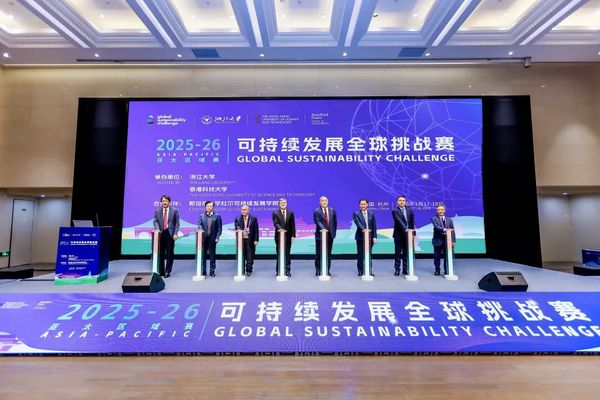
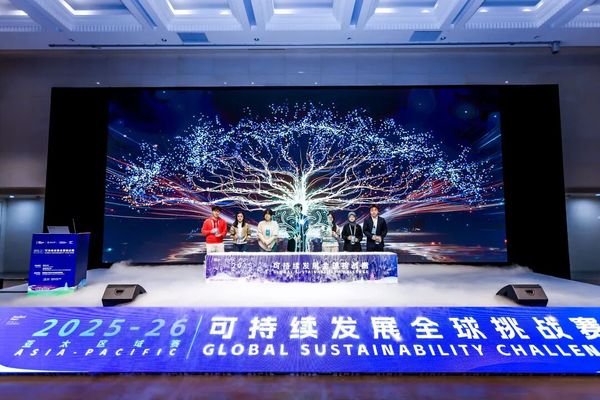
Across the Asia-Pacific final, teams presented their projects through vivid pitches featuring clear explanations, software simulations, and device demonstrations. They exchanged ideas, shared experiences, pooled wisdom, and offered insights.
“Because sustainability is often seen as being at odds with corporate economic costs, many assume the government should be the main driver,” said a team led by SONG Yihong from Zhejiang University. To address this, the team integrated a stable combustion module, a hybrid radiation regulation module, and an AI neural-network intelligent control module, aiming to achieving unity between cost reduction and carbon reduction. “This allows companies to calculate both the economic ledger and the environmental ledger more clearly,” the team explained.
An interdisciplinary team spanning environmental science, medicine, and social work, Chil Pro, formed by students from HKUST, The Chinese University of Hong Kong, and other universities, demonstrated a simulated device that uses mountain-stream water to supply community water supply, alongside a smart management system designed to be both practical and engaging. Team member Ho Tsz Yu said, “Through this platform, we hope to present a low-cost, high-impact community-based solution.”
During the Q&A session, contestants brought their projects to life in strikingly different ways. Some placed compact devices and simulation models on the stage, reproducing complex processes within a few square meters; others wove personal memory and a sense of shared responsibility into their storytelling, tracing the origins of each project with sincerity and conviction.
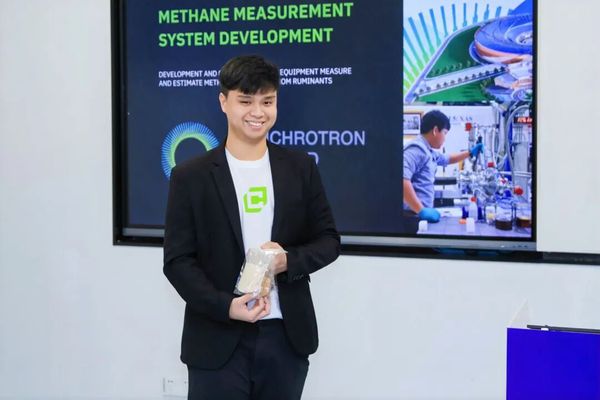
LOCOL, a team from Thailand, presented a high-efficiency cattle-feed supplement made from cocoa waste. The product reduces carbon emissions while improving farming productivity, helping translate laboratory results into real-world applications on Southeast Asian farms.
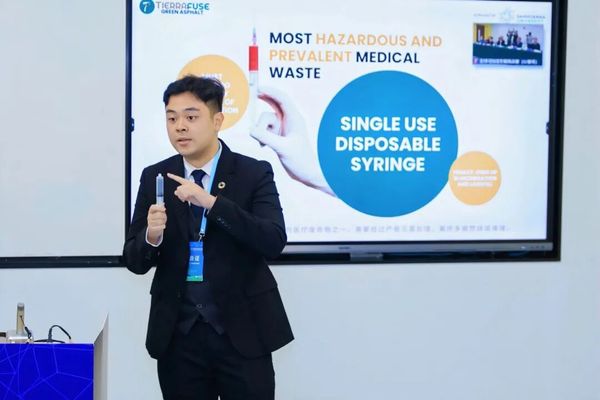
From Indonesia, CHEN Jianqiang, team leader of Tierrafuse, opened with upbeat music and simple dance moves to recreate scenes from his childhood near a plastic factory. The lively beginning quickly turned into a sobering account of Indonesia’s severe plastic pollution — an energetic, deeply human narrative that stayed with the audience.
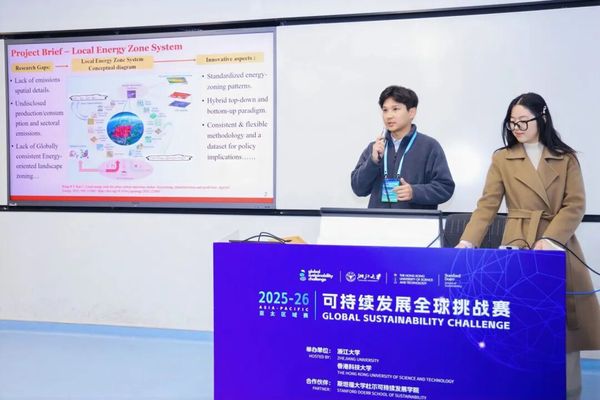
As a global competition with students at its center, the event places much emphasis on “youth creativity”, which resonated with many participants. “Young people play a crucial role in sustainability issues such as carbon neutrality,” said WANG Renfeng from the Hong Kong Polytechnic University. “We should draw on our disciplinary strengths, respond to real needs, and provide society with scientific insights that truly matter.”
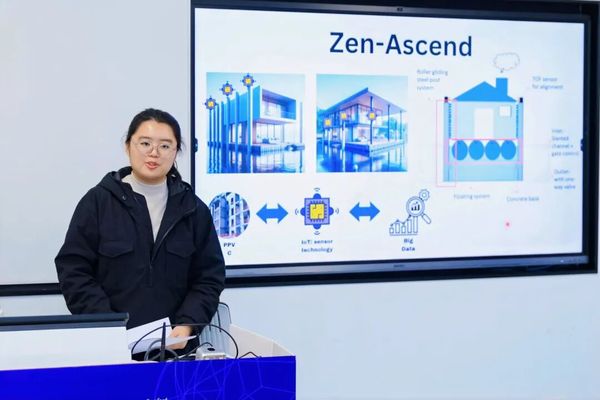
Speaking of the distinctive features of the Asia-Pacific final, the Zen_ascend team, comprising students from universities including the National University of Singapore, said, “The event combines collaboration and exchange with rigorous Q&A. We’re especially grateful for the campus tour arrangements.”
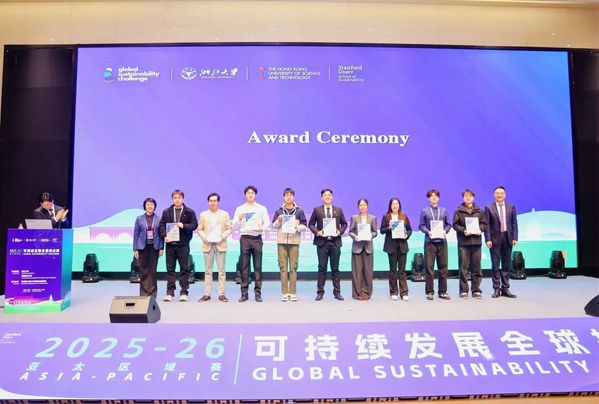
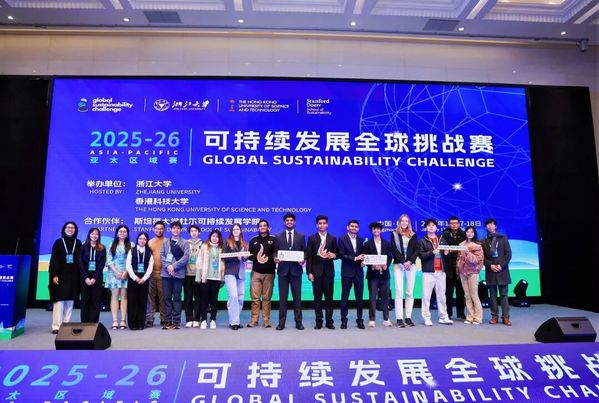
After preliminary rounds, poster exhibitions, and Q&A sessions, ten teams from universities including Zhejiang University, HKUST, and Nanyang Technological University advanced and will travel to Munich, Germany, for the global final.
A member of Impacta from HKUST shared, “We learned a lot from other contestants and the judges, and we received a great deal of encouragement. It’s a real honor to exchange ideas and collaborate with teams from different fields.”
A competition has its end date, but exploration does not. Talents gather, and friendships prevail. While this event seeks answers to “how we achieve sustainable development,” something even more valuable shines through: the vitality and creativity of Asia-Pacific youth. May this youthful aspiration, illuminated at Zhejiang University, continue to glow, lighting the way toward a future that is sustainable, inclusive, and alive with possibility.
Translator: FANG Fumin
Editor: HAN Xiao